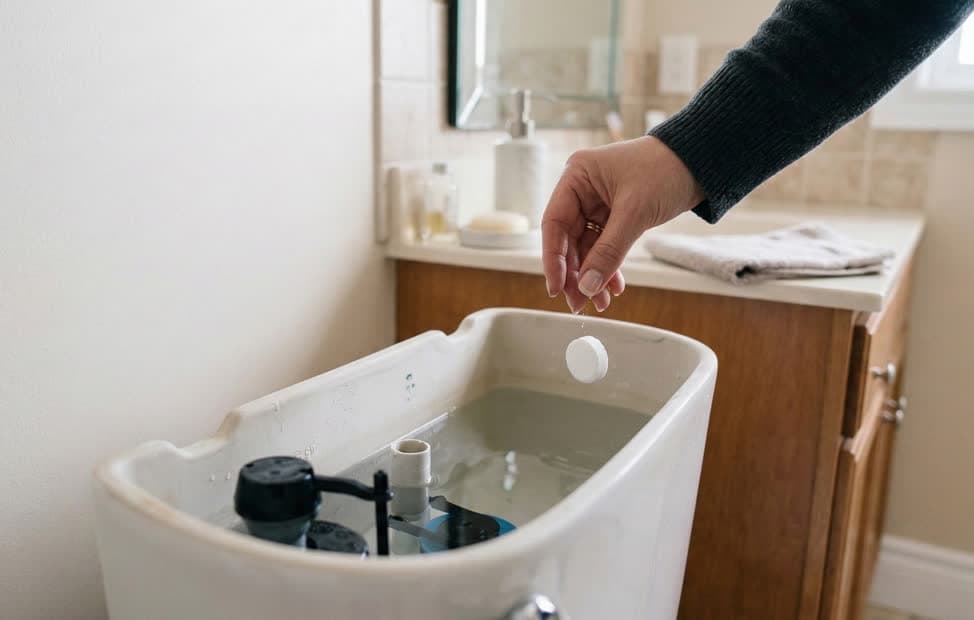
Those drop-in bleach tablets seem like an easy way to keep your toilet sparkling, but here's the truth from a plumber's point of view: they can quietly destroy the inside of your toilet and even damage your plumbing system over time.
There's no question—everyone loves a clean, fresh-smelling bathroom. And for many homeowners, those tablets look like a set-it-and-forget-it solution. The problem is what all that concentrated bleach does while it sits in the tank.
Why Bleach Tablets Are a Problem
Bleach is a powerful chemical. When it sits in your toilet tank for long periods of time, it becomes far too harsh for the parts inside your toilet—and eventually for the pipes the water flows through.
Here's what we see most often in the field:
- Corroded rubber seals and gaskets – The bleach breaks down rubber components, causing leaks and running toilets.
- Damaged flush valves and flappers – These parts become brittle, warped, or cracked, often leading to constant water loss.
- Accelerated wear on porcelain and internal mechanisms – Long-term chlorine exposure can weaken surfaces and shorten lifespan.
- Potential pipe corrosion – Excess bleach in the water can slowly eat away at metal pipes and fittings, especially in older homes.
The Hidden Cost of Convenience
Those tablets might promise a "set it and forget it" cleaning solution, but the repairs they cause can be far more expensive than any benefit they provide. A constantly running toilet alone can waste hundreds of gallons of water every month—and a corroded flush valve or deteriorated gasket often means a full replacement.
Better Alternatives for a Cleaner Toilet
You don't need bleach tablets to keep your toilet fresh. Try these plumber-approved options instead:
- Use mild bowl cleaners applied directly to the bowl, not the tank.
- Clean regularly with a soft brush and non-abrasive cleaners.
- Install water filtration if you have hard or mineral-heavy water that causes staining.
When in Doubt, Skip the Tablets
As a plumbing and heating team serving Spencer, Worcester County, and the surrounding towns, we've seen firsthand how much damage bleach tablets can cause. They might seem helpful, but in the long run they can lead to leaks, clogs, and costly repairs.
If you've used bleach tablets and notice your toilet running, leaking, or not flushing properly, we're here to help. Our family-owned team can inspect, repair, or replace damaged parts before things get worse.
Noticed a running or leaking toilet after using tablets? Call our plumbing team at (833) 969-4330 to keep your plumbing in great shape.